
Kokomo Directory Collections by Era
Kokomo directory holdings begin with Wiggins & McKillop's 1876–77 volume and continue in uneven runs through the twentieth century. The Indiana State Library's Howard County directory guide is the clearest edition list. KHCPL's Genealogy & Local History Department is the main local reading room, while selected issues also appear on microfilm or online. No source supports a complete yearly run, so the table keeps publisher changes and gaps visible.
| Collection | Years | Where Held | Access |
|---|---|---|---|
| Wiggins & McKillop, reconstructed and Stephen's | 1876–77, 1880, 1899–1901 | Indiana State Library | Catalog and print reference |
| Bryant and Union Directory editions | 1903, 1908–09, 1910–11 | State Library, KHCPL and selected digital scans | Print, microfilm and free scan |
| Polk and Robinson's directories | 1912–2001, uneven issues | State Library and KHCPL GLHD | Reference, microfilm and selected online issues |
| Kokomo-Howard County Polk | 2012 and 2015 | Library holdings require confirmation | Ask staff before visiting |
| Haines township/community directories | 1988–2013, varying coverage | Indiana State Library guide | Reference access |
The longest span is not a smooth annual series. Polk and Robinson's sometimes overlap, and their formats can differ. The guide lists isolated early issues, a large but broken later run, and only two recent Kokomo-Howard County editions. Search both publishers when a year offers both. Ask the holding library whether the needed issue is print, film, or licensed online access before making a trip.
KHCPL Opens the Kokomo Shelf
The KHCPL Genealogy & Local History Department at the Main Library is the practical first stop for a local volume search. Its research hours are Monday through Thursday, 9 a.m. to 8 p.m.; Friday and Saturday, 9 a.m. to 5:30 p.m.; and Sunday, 2 to 5:30 p.m. Most genealogy materials do not circulate. A useful request gives the full name, spelling variants, likely years, a street or firm, and the kind of fact being traced.
KHCPL's collection inventory reaches far beyond directory volumes. It includes county cemeteries, obituaries, funeral notices, court books, wills, guardianships, naturalization, yearbooks, church records, newspaper files, and local business material. These sources help resolve a printed entry without treating the listing as a full biography. Ask staff for the edition, page, collection title, image or roll number, and any limits in the index.
Note: A negative index search means only that the name was not located in that collection, not that no Kokomo record exists.
Kokomo Directories on a Screen
The 1910–11 Kokomo City Directory and Howard County Gazetteer is freely browsable as a page scan with OCR text. FamilySearch catalogs five microfilm reels and an online resource for that title. Selected Polk issues are listed through licensed genealogy services, while the State Library guide records which editions have an online path. Always open the page image. OCR often confuses initials, compass directions, and phone digits.
Howard County Memory adds yearbooks, local images, obituaries, court-index scans, wills, churches, and other records from a partnership formed in 2002. Its project describes more than 180 yearbooks and 20,000 images. Those items may explain a name, school, firm, or address found in a directory, but the collection title and item metadata should travel with every citation.
Decode a Kokomo Directory Entry
The inspected 1910–11 Union Directory pages show how much detail fits on one short line. An entry may give a spouse in parentheses, a trade or works, a house or room address, and a telephone number. The Taylor and Tatem lines include glass works, building work, streetcar work, foundry trades, student status, boarding, and rooms. These marks describe how the publisher classified a person at that date. They do not establish legal ownership or a complete household.
| Name | Surname, given name and sometimes a spouse in parentheses |
|---|---|
| Trade | Occupation, industry or abbreviated type of work |
| Residence mark | h for house, bds for boards, or rms for rooms |
| Address | House number, compass direction and street |
| Phone | Telephone number when the household had one |
- Criss-cross directory
- A later directory arranged by street address or phone instead of surname. Availability must be checked edition by edition.
- Householder index
- An address-order list used to find the named adult attached to a house in that edition.
- Abbreviation key
- The publisher's list of shortened terms. Save it before expanding marks such as
wks,lab, orcarp.
The sample includes two people with the same first and last name but different work and address details. Compare the whole line, not just a name. Check the page image, nearby alphabetical entries, another edition, and a map. OCR text is a shortcut to the page, never a substitute for it.
Kokomo City Directory Milestones
Publisher shifts and new access tools explain why one search method does not work across the full run. This compact timeline marks the verified breaks without claiming that every intervening year survives.
| Year | Directory or access milestone |
|---|---|
| 1876–77 | Earliest verified Wiggins & McKillop directory |
| 1910–11 | Union Directory volume and county gazetteer now available as a scan |
| 1963–97 | Several years list both Polk and Robinson's issues |
| 2002 | Howard County Memory partnership begins |
| 2012 and 2015 | Recent verified Kokomo-Howard County Polk holdings |
The county itself also changed names. Records from the earliest period may appear under Richardville County or one of five parent counties. That historical point matters more for deeds and probate than for the later directory run, but it is a useful fallback when a family trail reaches the 1840s.
Kokomo Records Beside Directories
Directory years gain weight when paired with another record made near the same date. The Indiana State Library Howard research guide lists naturalization, land, marriage, court, newspaper, and microfilm sources. KHCPL holds 74 microfilm rolls from county court books reaching 1844, plus cemetery and obituary collections. Census access through HeritageQuest can add household relationships and ages.
- Yearbooks test a school, class, and approximate age.
- Obituaries may explain a disappearance between editions.
- Cemetery records can close a death trail.
- Deeds distinguish an address listing from legal title.
- Census returns add relationships between directory years.
The Howard County Historical Society can add building, industry, and district context. Its current public holdings and copy fees were not verified, so contact the museum with a narrow name, site, and date request.
The historical society's official page is shown below. It offers a useful local contact point, while exact collection access should be confirmed with staff.
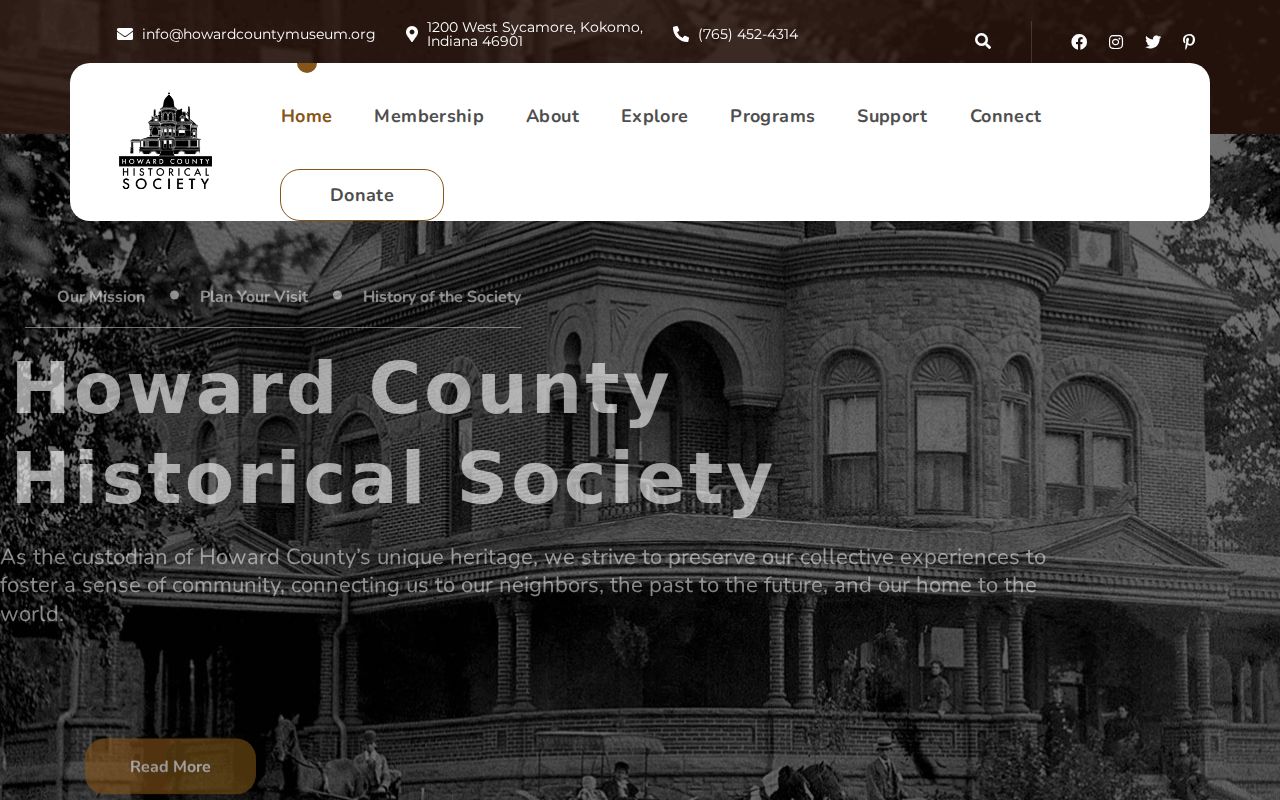
The captured page connects a directory name or address to Howard County's broader museum and local-history resources.
What Kokomo Directories Leave Out
A printed directory is a publisher's snapshot, not a census. Some adults were unlisted, a business address may appear in place of a home, and a household could move after canvassing. Later reverse sections are not guaranteed in every issue. A name's absence can reflect a gap in the surviving run, a spelling choice, OCR trouble, or publisher coverage.
Kokomo's industrial history can also shape the wording. A short plant or works label may point to local glass, foundry, machine, or auto activity, but it does not prove a lifelong link. Use a company file, newspaper, or later directory before drawing a wider conclusion.
Check Kokomo Directory Identities
An old directory entry can lead to a later public index, but access rules differ. The Howard County Voter Registration office explains the local registration route, while Indiana limits public voter-file uses and protects confidential records. A current voter lookup is not a historical household roll, and it should never be used to fill a gap by guesswork.
The official county page shown below is the correct starting point for registration questions and local office contact.
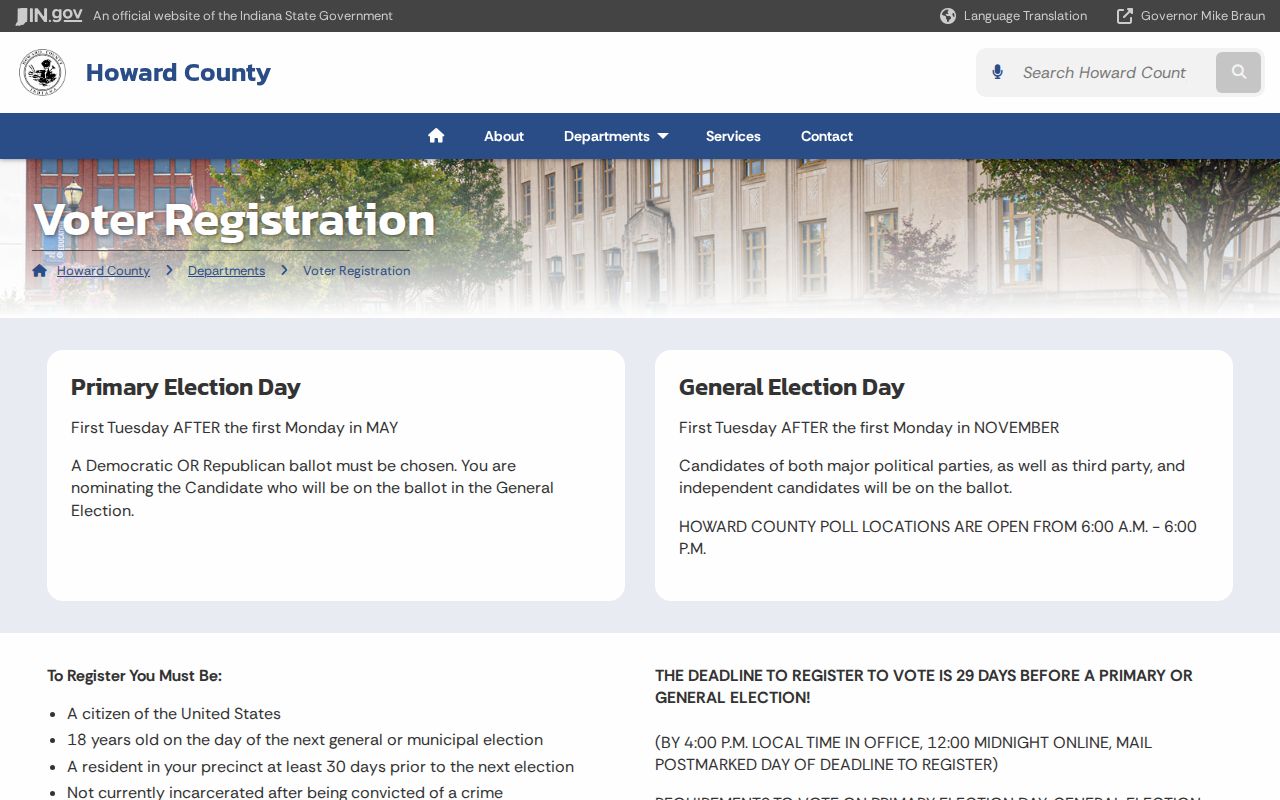
It helps separate a permitted current registration check from research in a historic Kokomo volume.
Vital records have their own rules. Indiana now opens birth and stillbirth registrations or certificates to any requester 99 years after creation, while younger records remain subject to direct-interest and identity requirements. The Indiana Department of Health order page lists statewide order routes and forms.
The state ordering page pictured below is a route to a certificate request, not a name-search substitute for the directory shelf.
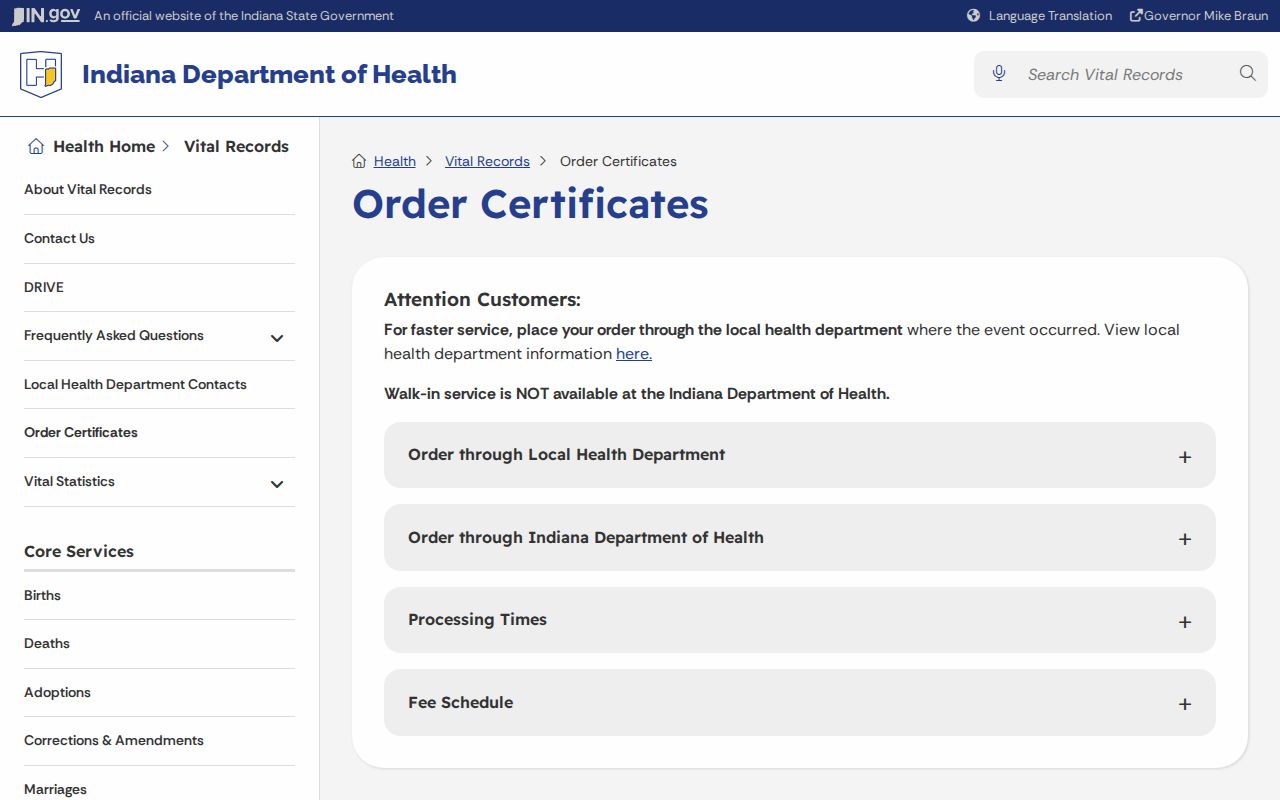
Use it only after a directory, obituary, or family source supplies enough event detail and the requester meets the access rule.
Trace Family Through Kokomo Directories
Family research works best as a sequence of dated checks. Begin near a census, obituary, marriage, or known move. Preserve the exact printed form of the name and street before making modern corrections.
- Search surname variants, initials, a spouse, and adult children in one likely edition.
- Move through adjacent available years and record every address, phone, trade, and publisher.
- Use a reverse section only when that edition contains one, then compare nearby names and addresses.
- Pair the 1910, 1920, or 1930 directory trail with the matching census household.
- Test a disappearance with an obituary, deed, probate file, cemetery record, or later edition.
A shift from h to bds or rms can reflect a real move, a publisher's label, or an incomplete canvass. It is not proof by itself. For a modern address-centered trail, use the Kokomo street directory rather than forcing old directory data into a current claim.
Two independent sources are a sound minimum. One establishes the dated listing; the second tests the identity or event. That method protects family history from same-name errors and turns a short printed line into a well-sourced record trail.