
Kokomo Resident Lookup Sources
No official office keeps a complete list of everyone living in Kokomo. A useful resident lookup instead joins records created for different public duties. The Howard County Auditor can supply an owner or mailing-address clue. MyCase can show a named party in a public court matter. Indiana Voters serves registration and polling questions, while vital-record offices and the Clerk control event records and certified copies. Public license and business searches can confirm a dated professional or entity role. Each source proves only what its keeper recorded.
| Record | What It Confirms | Where to Search | Access |
|---|---|---|---|
| Property and tax list | Recorded owner, parcel, property and mailing fields | Howard County Auditor | Online list, assessor counter |
| Voter service | Registration and polling information for the user | Indiana Voters | Individual portal; county office fallback |
| Court index | Party role, court, case type, status and events | MyCase | Public cases online; Clerk holds the file |
| Vital and marriage records | Event, date, relationship, or certified document | Howard Vital Records and Clerk | Eligibility varies by record and age |
| Licenses and entities | Credential, status, entity ID, or filing role | PLA and INBiz | Free public search; copies may cost |
Choose the first record from what is already known. An address points to the Auditor. A case number belongs in MyCase. A profession or license number belongs in PLA. A date of death can lead to Howard Vital Records, the library obituary index, or probate. For a common name, do not search farther until a second identifier appears. Kokomo name-search results are much safer when the county, date, middle name, parcel, court, or license number agrees.
Search Kokomo Court Names
Indiana's MyCase portal is the main online court-name route for Howard Circuit and Superior Courts. Use the Search by Name tab, try a full legal name, and enable the sounds-like option for a spelling variant. Advanced controls can limit status to all, open, or closed and set file-date bounds. Narrowing to a Howard court reduces same-name noise. The public screen may also require a captcha.
| MyCase control | How it helps a person search |
|---|---|
| Name and sounds-like search | Tests exact and phonetic first, middle, and last-name forms. |
| Court filter | Focuses on Howard court IDs, including 34C01 and 34D01 through 34D04. |
| Status | Separates all, open, and closed cases. |
| File date from/to | Confines the result set to a known period. |
A public result can list the case number, court, type, filing date, status, party role, events, hearings, dispositions, and some documents. It is still an index, not the official file. Adoption, juvenile, sealed, expunged, and other confidential material may not appear. Call the Howard County Clerk at 765-456-2000 or visit Room 202 at 104 N. Buckeye Street for the public file, certification, or archive help.
Match the Right Kokomo Resident
A shared name is the largest name-search trap. A court party, parcel owner, registered agent, license holder, and directory householder may all be different people. Compare a middle name or initial, suffix, document date, address, parcel legal description, court, license number, and public role. Two records that repeat only the first and last name do not make a sound match.
Roles matter too. An INBiz registered agent accepts service for an entity; that label does not prove ownership or residence. A parcel mailing address may belong to a trustee or be outside Kokomo. PLA shows a credential and public location field, not a guaranteed home address. Write the role and date exactly as the official result states.
Insider tip. Keep the parcel number, property address, and owner name from an Auditor row, then verify the details in Beacon and the Recorder rather than treating the row as a full parcel card.
Verify Kokomo Resident Records
Build a match from one primary record and one independent check. The sequence below starts with a known name and address. It keeps the situs address, where the parcel sits, separate from the mailing address used for tax mail. It also keeps a court party role separate from a finding by the judge. Those small distinctions prevent a person search from becoming a guess.
- Search the Howard Auditor by owner name or property address. Save the parcel number, tax year, owner, property address, and mailing address as separate fields.
- Check the Recorder's grantor/grantee index and deed image. Compare the legal description, co-grantee, document date, and prior deed reference.
- Run MyCase for the name and variants. Match the Howard court, case date, and party role instead of relying on the name alone.
- Use an event index, obituary, license, or entity ID as the second source. Request a certified copy from its custodian if official proof is needed.
- Docket
- The dated list of filings, hearings, orders, and other events in one court case.
- Index vs image
- An index points to a record through names, dates, and identifiers. An image shows the document itself and may have separate access.
- Certified copy
- A copy authenticated by the office that holds the original record.
Kokomo Vital Record Routes
Howard County Vital Records handles Howard County births and deaths from its office at 120 E. Mulberry Street, Room 209. Requests can go by walk-in, mail, fax, or email, with identity and relationship rules for restricted copies. IDOH handles statewide Indiana orders by mail, phone, and its authorized online vendor. The Howard County Clerk is the route for certified marriage and divorce copies.
Indiana changed the public-opening rule for birth and stillbirth registrations in 2025. Under IC 16-37-1-7.5, they open to any requester after 99 years. The Howard page still carries older 75-year genealogy wording, so confirm the current policy before ordering. Death, marriage, and divorce records follow their own rules. A historical index is a clue, not a certificate.
For a deceased Kokomo resident, the KHCPL vital-record index and obituary resources may connect a date, family name, or newspaper entry. The library's Tribune obituary index begins October 22, 1998; older newspaper microfilm and local collections require a staff-assisted search. Pair the item with probate, cemetery, or Clerk evidence before stating a relationship.
Note: A negative vital-index search means the name was not found in that collection, not that no event record exists.
Confirm Kokomo Licenses
The Indiana Professional Licensing Agency's Free Search & Verify tool offers a strong identifier when a person is known by a regulated profession. Search by profession, name, license type or number, city, county, ZIP, status, doing-business-as name, or facility. A license number is far more useful than a name alone. Results can show the licensee, number, type, status, city, and state.
Open the official PLA verification search before reviewing the captured form below.
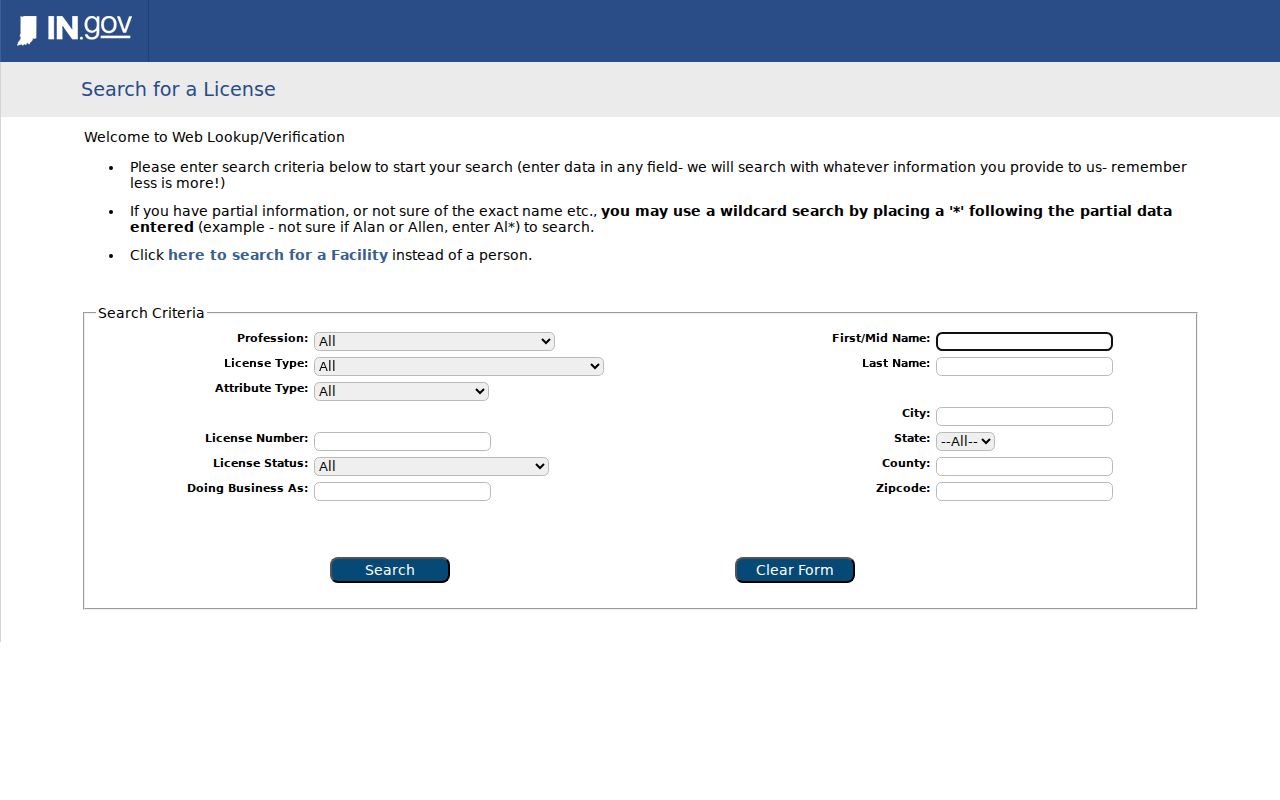
The form's many filters help separate two people with similar names, but the city or county shown is a public credential field, not proof of a private home address. Home phone and email are confidential under IC 25-1-5-1. Use the board, profession, number, and status as the match.
Kokomo Family and Reunion Clues
A lawful person search often begins with a family or reunion question. For an estate trail, search the Clerk's probate file, then compare the Recorder deed, obituary, cemetery entry, and tax list. For a former classmate, start with KHCPL yearbooks and city directories, then move to an obituary, newspaper item, or independently confirmed public civic role. Keep the last fact historical if no current official source confirms it.
Birth-parent and adoption questions must follow IDOH or Howard Vital Records eligibility rules and authorized adoption or kinship channels. Adoption cases are not public in MyCase. A cluster of names, dates, and addresses in genealogy sources is not permission to expose a protected identity.
The Indiana Unclaimed Property search is another official name-based route for one's own property or an estate matter.
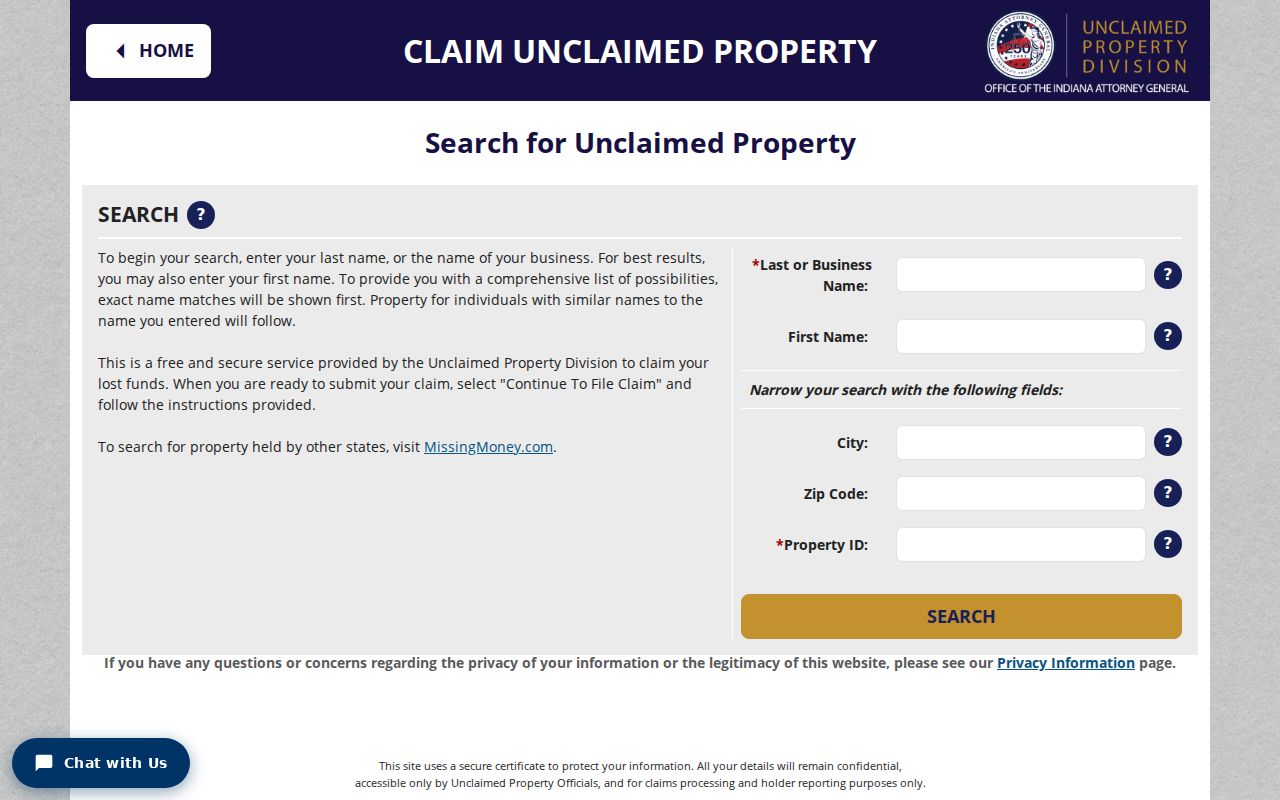
Indiana's service is free. Treat a possible match as a claim lead, then follow the state's proof-of-ownership process rather than paying an unsolicited recovery service.
Check Kokomo Custody Sources
Custody records sit outside the court-name and property paths. The Howard County Sheriff's current-inmate roster covers the local jail at the time checked. Indiana's Department of Correction locator covers the state correctional system. Neither is a full life history, and a missing result does not prove that a person has never been held anywhere.
Use the official Indiana DOC incarcerated locator for a state custody question.
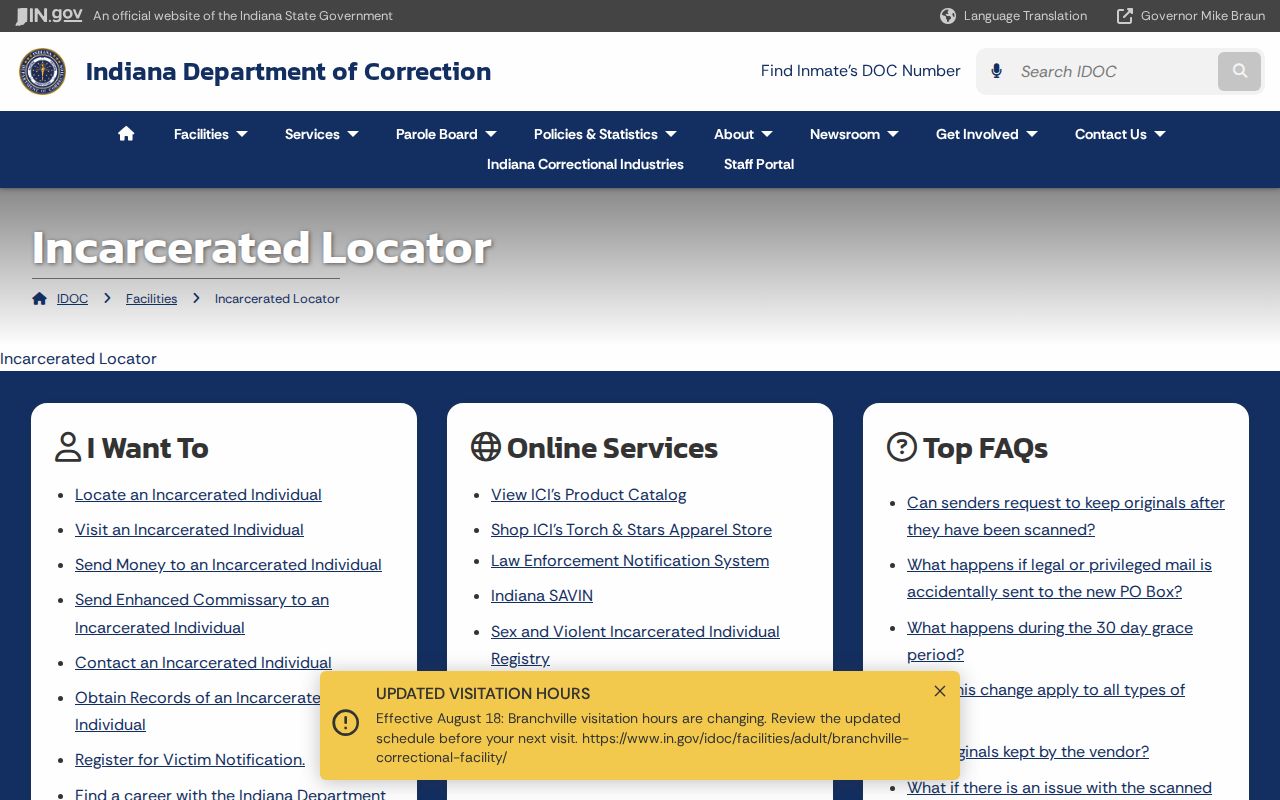
Record the search date and the agency scope beside any result. A court docket, agency request, or direct office confirmation provides context that a locator card alone cannot.
Request Missing Kokomo Records
Online does not mean complete. MyCase may omit an older image, a sealed matter, or a filing not yet entered. A voter form may not render. A vital certificate may require identity proof. Ask the actual keeper for an existing, releasable record: the Clerk for court and marriage files, Voter Registration for election records, Health or IDOH for vital records, and the issuing board for a license.
Indiana APRA, IC 5-14-3, allows any person to request an existing public record subject to exemptions and redactions. Oral and written routes are possible, but a focused written request creates a useful trail. State the record type, office, date range, case or license number, preferred format, and willingness to pay an allowed copy charge. An office need not create a new people list or analysis.
Read Kokomo Resident Results
A result screen needs context before it becomes evidence. In MyCase, record the case number, case type, court, filing date, status, party name, and party role. Then read the chronological case summary for event dates, hearing entries, dispositions, and any linked public orders. Financial information may be incomplete or out of date. Converted events from an older court system can also appear. The Clerk, not the public portal, holds the official record.
- Identity fields: exact name form, suffix, and stated party role.
- Jurisdiction fields: court name and Howard court identifier.
- Case fields: number, type, filing date, and displayed status.
- Event fields: dated entries, hearings, dispositions, and public document titles.
- Source fields: portal URL, access date, and any warning or confidentiality note.
Historical court indexes work differently. Howard County Memory scans can list last and first name, event, order-book volume, date span, source, roll, part, page, and notes. That entry is a locator for a book or microfilm page, not a modern docket summary. KHCPL holds court-book microfilm back to the county's early years, and the Indiana State Library guide identifies more court, probate, and will series. Ask for the cited roll, part, page, or volume rather than assuming the index tells the whole case.
Every match should carry the source, jurisdiction, record date, access date, role, and confidence. Use labels such as recorded owner at the tax year, court party in a named case, licensee in a PLA result, or directory listing in a specific edition. If one historical source supports the match, call it historical and state what it does not establish.
Check Kokomo Resident Filings
INBiz can help when a resident name appears with a business, trade name, or registered entity. Its search supports contains, starts-with, and exact-match modes. Fields include business name, business ID, filing number, registered agent, incorporator or governing person, type, status, name type, street address, city, and ZIP. Save the entity ID before comparing a person because names and assumed names can change.
A result may show the legal entity name, type, status, formation date, registered office, agent, governing person, and filing history. Each label describes a filing role. A registered agent receives legal service and may not own the entity, run its daily work, occupy its address, or live there. An inactive status describes the entity at the search date, not a person's whole history. Match the ID, address, dates, and role against a second official record.
Send corrections to the office that created the record. Property fields go to the Auditor, Assessor, or Recorder. Court data goes to the Clerk. Election data goes to Howard County Voter Registration. Vital certificates go to Howard Vital Records or IDOH. License data goes to the issuing board. Keep the request, response, and new access date. A private compiled listing cannot amend the government's source.
When no result appears, report “not located in the source checked” instead of “no record exists.” The difference covers spelling variants, date limits, offline holdings, confidential files, and system delays. It keeps a Kokomo name search from making a harmful negative claim based on one search box.
Save the exact query as well. A full name, sounds-like setting, county filter, date range, and search date let another person repeat the lookup. If the source changes later, the saved method explains why two careful searches may produce different results. Do not merge two people merely to make the record trail look complete.
Kokomo Name-Search Limits
Some missing fields are protected by design. Indiana's Address Confidentiality Program supplies a substitute address to eligible survivors, and voter records can receive a related confidential flag. Howard GIS may show that information is withheld under IC 36-1-8.5. Juvenile, adoption, sealed, expunged, and other restricted court matters may not appear. A blank field is not proof that the person or parcel does not exist.
The myth that every public record belongs in a compiled profile causes real harm. Keep full dates of birth, signatures, protected addresses, driver data, utility details, and confidential voter fields out of a Kokomo name search. Correct an error through the custodian that created it. The Auditor or Recorder handles property data, the Clerk handles court data, and the issuing agency handles a credential.
Lawful use. Use a Kokomo name search only for lawful personal research. Indiana Code 35-45-10 forbids stalking, and no result should support harassment, threats, or unwanted monitoring.